
Eight Tips for Guiding Your Brand Through Economic Uncertainty

Leading a brand in normal times is already hard enough, but guiding your brand through economic uncertainty is an entirely different matter. As the saying goes, storms show the difference between someone who simply owns a boat and a skilled sailor. By all metrics, the economic seas are getting very choppy, and extremely dark clouds are on the horizon. Nobody knows if those clouds will develop into a Category 5 hurricane or just a brief storm.
If you are at the helm of a brand, you might be wondering what you are supposed to do. Perhaps you are even contemplating “jumping ship.” We don’t suggest the latter, as many brands have been founded in turbulent times. With a level head and a steady hand, it is even possible to outmaneuver your competition as they get lost in the storm. The challenge is not just surviving the storm, but coming out the other side with an intact ship. Enough with the overabundance of sea-faring jargon. Here are our eight top tips for guiding your brand through economic uncertainty. In the following article, we will discuss:
- The economic metrics you should pay attention to.
- How the economy can be just as emotional as it is data-driven.
- Why transparency matters in economically uncertain times.
- Why stopping your marketing to save money is always a bad idea.
- Other tactics to employ during economic turbulence.
Don’t Panic
These are indeed some very strange times. The stock market has more ups and downs than a Korean television drama. Depending upon which news channel you watch, we are already in a recession, heading for one or doing just fine. Hopping online doesn’t bring any respite with a sea of clickbait headlines and “experts” claiming to know what is happening. Consumers are understandably concerned and getting more nervous by the day.
All of it is enough to make you panic, but that is the absolute worst thing to do when guiding your brand through economic uncertainty. Navigating the path ahead will require a clear mind, an abundance of adaptability and competent decision-making. None of that is possible if you are having a nervous breakdown. Your panic is also infectious and breeds even more panic among your employees. A company-wide “freak out” is the last thing anyone needs. If you must scream, do it quietly into your pillow at night when no one is around, like the rest of us.
Pay Attention to the Right Metrics
Adding to the panic is that the economy has become a political issue. Reports on its health often vary depending on what side of the political spectrum they come from. Many economic “experts” seem more interested in gaining clicks or having face time on television than in providing usable information. The economy also has been flashing bright red, sometimes a bit green and even yellow, making interpreting it even more difficult.
Most of us are currently bombarded with more economic data points than we know what to do with. However, getting lost in stock market corrections, inflation metrics, GDP contractions and other indicators can distract us from what is really important and make guiding your brand through economic uncertainty harder. So, what should you pay attention to as a leader looking to guide a brand through uncertainty? Some great metrics are the Consumer Confidence Index and the lesser-known Present Situation and Expectations Indexes.
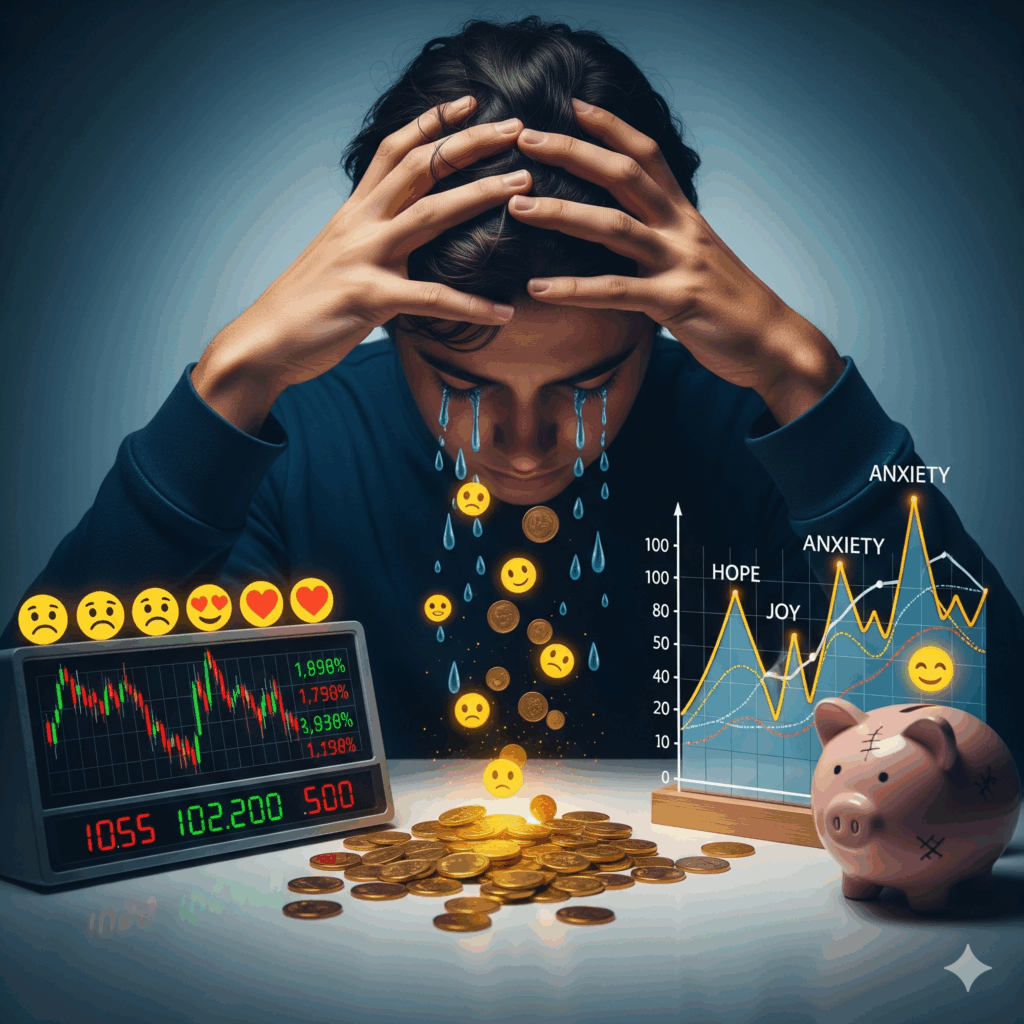
The Often-Misunderstood Emotional Economy
So why are those metrics worth considering? Other commonly quoted economic figures, like inflation and GDP, are lagging indicators that look backward. Yes, they give a snapshot of the economy’s recent overall health (or lack thereof). However, most of us are trying to figure out what is happening right now and what the future might look like. The Consumer Confidence, Present Situation and Expectation Indexes do that by looking at how consumers feel about the present, near-term and future.
More importantly, these indices are the few that consider how consumers actually feel about the economy. The emotional aspects of the economy are often overlooked or ignored. However, how consumers feel about their economic situations can be more important than reality. During the last election, many economic indicators were positive overall, but lots of people still weren’t “feeling it” and lacked a rosy view of the economy. And if consumers aren’t jazzed about the current economy or its near-term outlook, they will always spend less.
Get Close to Your Customer
Consumers and their behavior mystify some brands. However, it doesn’t have to be that way, and honestly, it shouldn’t. As you try to guide your brand through economic uncertainty, you will need a deep understanding of consumers’ feelings. Knowing what they are thinking and how they perceive the future will be critical for developing long-term strategies. That “intel” should also come directly from your customers and not from general consumer sentiment, as there can be variations between the two.
The best way to gain that customer knowledge is to interact directly with them. Go to events where they are or, better yet, start your own (check out our blog post on how to create an experiential event). Events are often misunderstood as extremely complicated and costly, but they don’t have to be. If events are outside of your wheelhouse, our experiential event specialists are experts at crafting smaller, more intimate events perfect for customer interaction. They are also great for gathering valuable first-party data to aid your marketing efforts.
Don’t Kill Your Marketing
You need to remain calm and collected to avoid making knee-jerk decisions. One of the biggest ones we often see while guiding your brand through economic uncertainty is to eliminate all marketing efforts. Yes, getting rid of your marketing creates short-term savings, as there are no longer any of those pesky marketing budgets. However, it also creates a self-fulfilling prophecy in the long run, as your sales tank because of a lack of marketing. Things get even worse when that downturn is misattributed solely to a poor economy, leaving you stuck with subpar sales.
Remember, marketing campaigns build momentum, and a total pause kills that momentum, making it harder to get rolling again. Marketing is not just a switch you can turn off and back on and expect the same results. Another vital consideration is that your competitors might not back off their marketing efforts, leaving you fending for scraps. While it is always hard to predict what your competitors might do, the only completely known quantity of eliminating marketing is reduced sales.
Look at What Works
While slashing your marketing budget to zero is not advisable, having to trim it might be unavoidable during economically uncertain times. However, the best way to trim is with a scalpel rather than a chainsaw. And, just like a real doctor, you don’t want to remove something vital. You’ll need some guidance on what to cut and how much.
One of the best ways to get that counsel is to sit down with your agency or marketing team and review your marketing plan. They should be able to tell you what is currently generating ROI and what could be scaled back. Remember, some branding efforts might not yield immediate returns, but they are still important. However, they should be able to guide your cuts. The best course of action is always to cut carefully to avoid long-term damage.
Be Transparent
While some like to keep things “close to the vest,” it is okay to be transparent about the impact of tariffs and the economy on your brand. Now more than ever, consumers want to purchase from brands they feel connected to. Being open about what your brand is experiencing humanizes your company and creates authenticity. Both are extremely important in building that sometimes elusive connection to your customers. Read more about why brand authenticity matters and how to build it.
The critical thing to remember when being transparent is not to come across as complaining. We are all in the same situation together, and nobody likes a whiner. It is also advisable to steer clear of politics and avoid going on a rant. While it might be tempting to bash politicians, it is also an easy way to damage your brand and turn away potential customers. Check out our blog post on protecting your brand identity in polarized times for more tips on avoiding political landmines.
Think Like a Guerrilla Fighter
History is peppered with smaller guerrilla fighters defeating much larger armies. Afghan fighters fought against the British, then the Russians and the Americans for decades. The Viet Cong, with significant help from the more conventional NVA, battled the French and then the Americans for over 20 years. How do these supposedly “rag-tag” forces take on armies with better weaponry and much bigger budgets? Often, they have better localized knowledge, adapt quicker, make rapid decisions, learn faster from their mistakes and use resources more efficiently.
All of these are valuable lessons for anyone leading their brand through uncertain times. Slow decision-making, overconfidence, blowing through resources and not recognizing the real situation “on the ground” have led to the fall of multiple armies. Don’t let those same factors lead to the demise of your brand. Now is the time to build an effective marketing strategy that maximizes your budget and quickly adapts to whatever the future holds.
We Can Help
Whether your brand strategy needs a tweak or a complete overhaul, we can help. At Kahn Media, our branding strategists are adept at developing flexible, realistic marketing plans that deliver results. As a full-service agency, they are backed by in-house specialists in social media, event planning, content creation, influencer engagement, public relations and digital marketing. We can function as a turnkey marketing department or assist your own. Contact us to see what is possible for your brand.