
What Does ChatGPT’s Decline Mean for Your Brand?

Is ChatGPT dead? That is the question spreading like wildfire across the media. So, is the buzz around ChatGPT’s decline and supposed upcoming demise just more clickbait designed to grab attention? Or is there an actual fire behind the online “smoke” and more to it?
Like many things, the real answer is more nuanced. However, there is a shift happening in AI, and things are getting interesting. Yes, the once-unstoppable ChatGPT is no longer growing its monthly active user base. In fact, that number is declining, and yes, this will have an impact on your brand. How? Keep reading to find out. In this article, we will cover:
- The big shift in AI that is happening right now.
- How those changes will impact your brand.
- What does the future of ChatGPT look like?
- Why brand authenticity is still absolutely vital in the age of AI.
- How YouTube is gaining prominence in AI search results.
Before we get started, we strongly suggest you read our blog post “Why Your Brand Should Care About AI Search.” It will help you understand the role of AI-powered search results and their impact on your brand.
Remember Myspace?
For those on the younger side, Myspace is probably a forgotten name. However, in 2008, 115 million monthly users spent inordinate amounts of time bedazzling their Myspace pages and interacting with random “friends” on it. Launched in 2003, Myspace took off like a rocket ship. By 2006, it surpassed Yahoo Mail and Google to become the most visited website in the United States. From 2005 to 2009, Myspace was the largest social networking site in the world.
So, what happened? One year after Myspace, another social media platform called “Facebook” launched. It had a simplified design, was easier to use without HTML knowledge and required a real email address. While both had similar core features, users preferred Facebook’s “genuine” connections and its usability. In short, it was a better product, and by the end of 2009, the party for Myspace was over. Facebook had overtaken it in daily users, and Myspace faded into oblivion. Today, 1.54 million monthly users still somehow stumble onto Myspace, mainly for nostalgic content, compared to Facebook’s 3 billion active monthly users.
The Rise of Gemini
The above scenario is probably one that keeps Sam Altman awake at night. OpenAI’s ChatGPT launched just over three years ago, in late 2022. Much like Myspace, its growth has been meteoric and can be credited with starting the “AI boom.” In under three months, the platform had already gained 100 million users, a feat unmatched even by TikTok. In 2025, ChatGPT had over 800 million daily users. That number was projected to reach over 1 billion users by early 2026.
However, something interesting happened in the middle of 2025. From August to November 2025, ChatGPT’s global monthly user base grew by only 6%. In that same period, Gemini’s monthly active users grew by 30%, according to a Sensor Tower report. The release of Gemini’s latest version in November 2025 only accelerated this trend. By the end of January 2026, ChatGPT’s decline in market share had dropped year to year from 86.7% to 64.5%. In that same period, Gemini’s market share increased from 5.7% to 21.5%. Even before those numbers came out, Sam Altman declared a company-wide “code red” at the end of 2025 in response to the decline.
First Launch Problems
So why has ChatGPT’s explosive growth come to a screeching halt? Well, Sam Altman wasn’t the only one to declare a code red. Google did exactly the same in December 2022 in response to the rapid rise of ChatGPT. This wasn’t just theatrics for show, as multiple teams were reassigned to work on AI products. Google founders Larry Page and Sergey Brin were also brought back to advise on AI strategy. The all-hands approach resulted in the launch of Bard in March 2023. At the beginning of 2024, Bard was renamed Gemini.
Like Facebook, Gemini is a more polished product. The first version already outperformed ChatGPT in benchmark tests. However, it wasn’t until the release of GPT-5 in August 2025 that people began to take notice of Gemini. Widely considered worse than the previous version, ChatGPT’s decline started, and users began looking for alternatives to GPT-5. That alternative was Gemini, and the migration to it began. In a stroke of almost perfect timing, an improved Gemini 3 was launched in November 2025, gobbling up even more former ChatGPT users.
So is ChatGPT having its own “Myspace moment,” where users permanently abandon it for another platform? Only time will tell.

The Money Pit with a Website on Top
OpenAI was originally launched as a non-profit venture for the “good of humanity.” Even though OpenAI abandoned its non-profit status, it technically still is, since it burns through money at an insane rate. Running ChatGPT reportedly costs OpenAI $700,000 every day, and for every dollar it earns, it burns over double that. The respected investment bank HSBC noted in an analysis that OpenAI still won’t be profitable by 2030 and would need another $207 billion investment to become so. Revenue is such a problem that the usually reserved Financial Times called OpenAI “a money pit with a website on top.”
A big part of the problem for OpenAI is how AI scales. The more people who use ChatGPT, the more computational power and electricity it consumes. OpenAI has already entered a $250 billion agreement with Microsoft and a $60 billion one with Amazon for cloud computing. To achieve its growth goals, OpenAI aims to reach 36 gigawatts of computing power by the end of the decade, using enough electricity to power 27,000,000 homes. By 2033, HSBC notes OpenAI’s compute commitments would reach $1.4 trillion. $620 billion of that is from renting data centers alone.
So is spending a boatload of money now to hopefully make a future profit a workable model? All we know is investors aren’t called “givers” for a reason.
How Does All This Impact Your Brand?
A key takeaway of ChatGPT’s decline and OpenAI’s revenue problems is how rapidly things are changing. Not that long ago, brands didn’t have to care about appearing in AI-powered search results because they didn’t exist. Fast forward to the present, and consumers are increasingly using AI platforms to find and compare products. Now, a decent number of those AI users are shifting from ChatGPT to Gemini. While ChatGPT isn’t going away, ChatGPT’s decline is large enough to suggest the newfound adoption of Gemini isn’t just a fad.
The best way to understand the impact of ChatGPT’s decline and Gemini’s rise is to audit your brand’s current AI visibility. Comprehensive audits, such as our AI Visibility Engine, perform a deep dive into multiple LLM platforms, including ChatGPT, Perplexity, Gemini and others. The result of this process is understanding how your brand appears in AI-powered search results that consumers increasingly use for product information. The detailed audit process also develops a plan to improve your AI visibility and stay ahead of the competition.
YouTube vs. Reddit
One interesting side effect of Gemini’s rise is that YouTube has overtaken Reddit as the most frequently cited platform in AI search results. It is no secret that LLM platforms naturally drive traffic to sites they are associated with. OpenAI and Reddit formed a strategic partnership in May 2024 to allow ChatGPT access to Reddit’s data. Google, or, to be precise, its parent company Alphabet, owns YouTube. The fact that YouTube is now the most cited platform shows that Gemini’s growth is indeed very real.
The shift to YouTube is a good thing, as Reddit can be a tough nut to crack for brands. Smaller brands can struggle to gain traction on Reddit with their own pages. Commenting on other pages can quickly become a hot mess if not done carefully, and it may not even be allowed by moderators. On YouTube, you control the messaging because it is your content. Even if it isn’t your content, commenting on other videos that feature your product is also seen as helpful.
No AI Slop Please
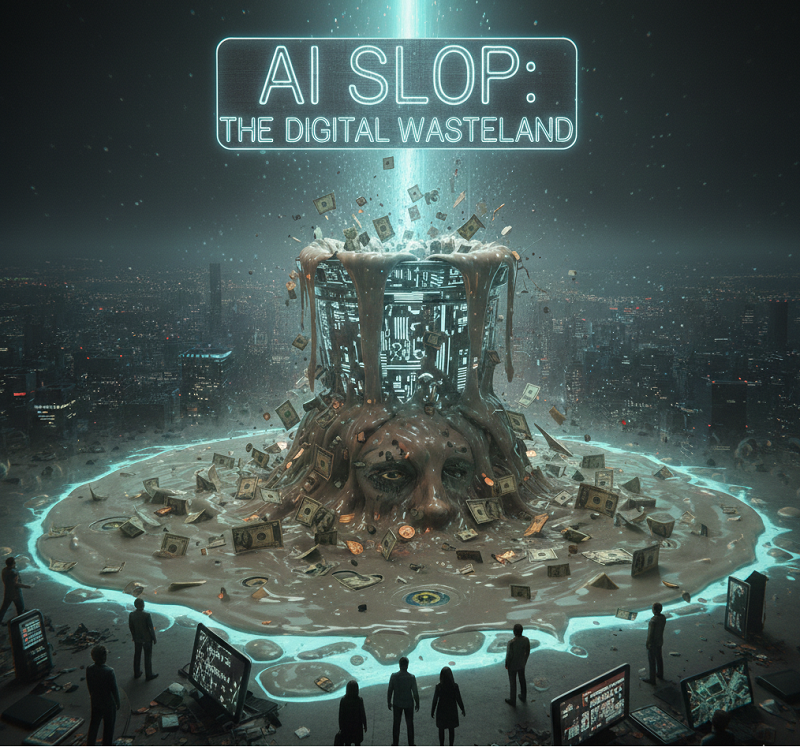
It is important to remember that the rise of YouTube doesn’t mean you can bombard your channel and its followers with AI-generated slop. Some have been tempted by the ease of generating content with AI to produce highly questionable content and lots of it. However, that strategy almost always produces a backlash, as McDonald’s recently found out. When it comes to your brand’s content, quality overrides quantity.
Quality content is important because it is central to telling your brand’s story and building its authenticity. Creating that authentic connection with your customers is impossible with poorly edited, inauthentic content that lacks actual humans. With 88% of consumers now saying authenticity is essential when choosing brands to buy from, you better believe it’s absolutely vital. If that statistic isn’t convincing enough, read our blog post for even more reasons why authenticity is the new currency for brands.
We Can Help
Whether you need an in-depth AI audit or authentic content that connects with consumers and AI search engines, we can help. At Kahn Media, we are a full-service marketing agency with a wide range of services and expertise. We can handle everything from social media management and influencer engagement to experiential event management, digital marketing, email marketing and more. With our teams of specialists, we can assist your marketing department or operate as a stand-alone one. Contact us to see how we can help your brand.