
Is Email Marketing Still Effective?
Some might question whether email marketing is still effective in the modern era. After all, there is a ton of buzz around AI right now, digital marketing delivers impressive ROI and social media can directly reach your audience. In contrast, email marketing can seem a bit antiquated. The first email was sent in 1971, and most of us have spent decades purging them from our inboxes. Surely, your marketing dollars would be spent more wisely on some newer and flashier options, right?
The answer to that might surprise some, as there is a reason email marketing continues to stick around. Despite what some might think, it remains an effective tool. Email marketing is a tried-and-true way to directly reach your customers and increase revenue. Yes, there are newer and more exciting ways to connect with consumers. However, email marketing shouldn’t be overlooked and needs to be part of your overall marketing strategy. Let’s look at why email marketing is still effective. In this article, we will discuss:
- What comprises an email marketing campaign.
- Why email marketing is extremely targeted.
- What is the most preferred method of brand communication.
- How email marketing is highly versatile and cost-effective.
What is Email Marketing?
First, we need to clarify what email marketing is, as there is definitely some confusion about the topic. Some brands send out an occasional newsletter or promotional email and consider that email marketing. Technically, they would be right, as those are part of email marketing. However, an effective email marketing campaign is much more cohesive and comprehensive.
Modern email marketing campaigns involve multiple layers and touchpoints. Automated emails can be set up to welcome new customers, convert abandoned cart items to sales, nudge people to return to your website and more. Lead magnets entice people to subscribe to your email list. Newsletters and content alerts can help build your brand and connect with consumers. A cadence of promotional emails informs your customers about sales and new products and generates ROI. All of them work together to form an effective campaign that delivers results way beyond what an occasional email can achieve.
Targeting With Extreme Accuracy
One reason for the effectiveness of email marketing is its laser-focused targeting. Most people think of digital marketing as being highly targeted. However, email marketing takes it a step further. Why? Because it goes to an audience who has either already made a purchase from your brand or opted to receive emails from it.
This difference might seem slight, but it is actually significant. You aren’t relying on an ever-changing algorithm to hopefully reach your customers. And you aren’t casting a wide net with other forms of marketing in an effort to connect with your target audience. Instead, your email marketing efforts go to people who have already shown an interest in your brand or are its existing customers. This validation of interest makes email marketing extremely effective if done properly.
It Goes Where Your Customers Already Are
Another reason email marketing is still effective is that it reaches your customers where they already are. You don’t have to try to decipher which social media platform they use or hope they don’t skip your YouTube ad. According to 2023 statistics, over 92% of the U.S. population uses email, and that is a lot of people.
Yes, email marketing has been around for a long time, leading some to think it is outdated. However, almost everyone in the U.S. has an inbox that they check regularly. Shouldn’t your email be in there, too? And if they have opted to receive communications from your brand, those emails don’t wind up in a never-read spam folder, either.
Email is the Preferred Method of Brand Communication
Figuring out what marketing channel consumers want to hear from your brand can be a struggle for many marketers. However, it doesn’t have to be that way, as a recent survey shows that 68% of respondents prefer to receive communications from brands via email. The next highest-rated options, “others” and “in stores,” don’t even come close, with only 8.3% and 6.9% of respondents favoring them, respectively.
Another insight from the survey is that all demographics prefer email for brand communications. Some think that only Boomers use email, while Gen Z lives on social media. While there may be some truth to that in general, it is not entirely accurate when it comes to brands. Yes, 73% of Baby Boomers prefer email as the channel to hear from brands, which probably isn’t surprising. However, 65% of Gen Z respondents felt the same way. In fact, every generation has a strong preference for email.
Email Marketing is Cost-Effective
Digital marketing receives a lot of attention for its high ROI (read our blog post for more information about maximizing digital marketing). However, email marketing can generate significant ROI because there is relatively little cost associated with sending an email. According to a Constant Contact survey, the average ROI for email marketing is $36 for every dollar spent. That is a solid return on investment without having to spend money to try to break through the “noise” of social media.
Another major plus of that affordability is that email marketing is easy to scale. The cost of sending 200 or 2,000 emails is the same, unless you are performing extensive audience segmentation. This means that email marketing is affordable for both small and large companies. Your email marketing efforts can also grow in tandem with your brand without incurring significant additional costs.
It Hits Every Part of the Sales Funnel
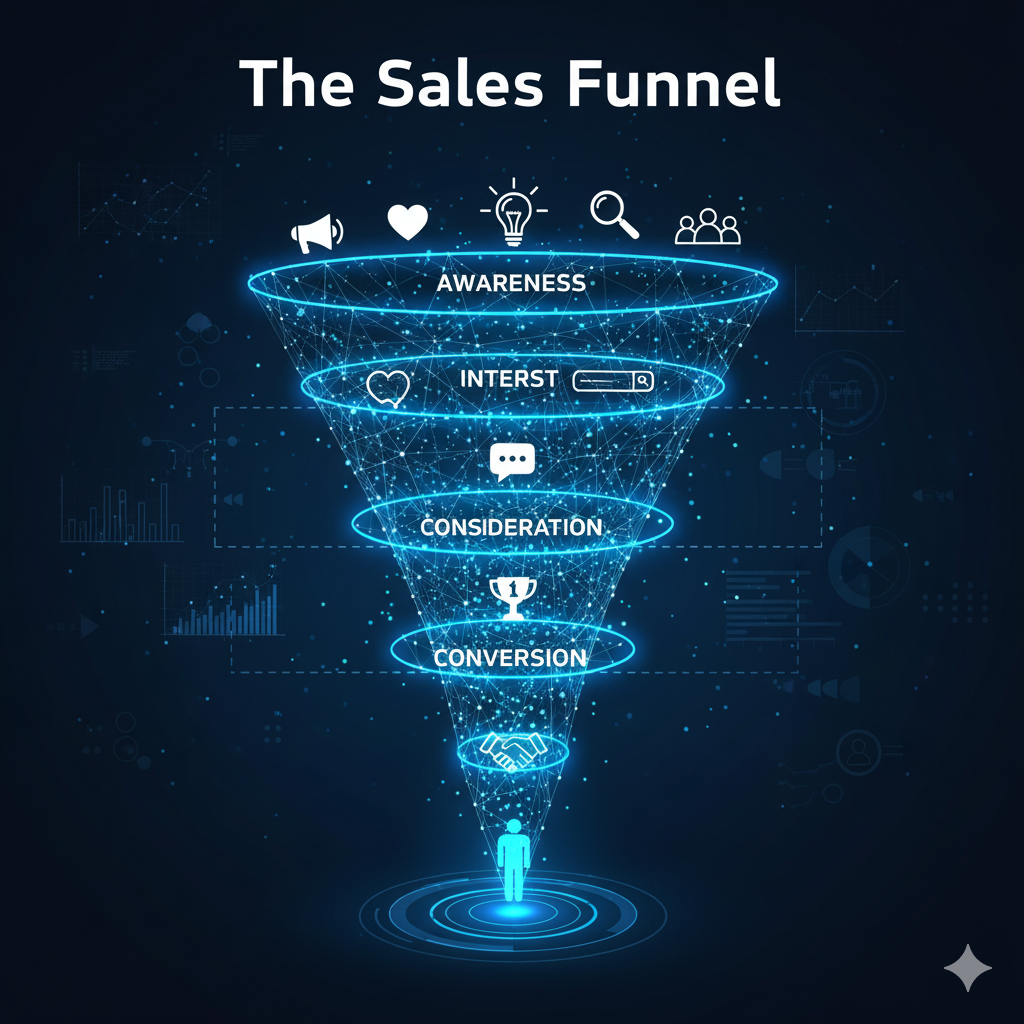
Most of us think of email marketing as only those emails we constantly get promoting a brand’s latest sale. However, there is a lot more that email marketing can do than that. In fact, email marketing is highly versatile as it can target almost every point in the sales funnel.
Email marketing can help raise awareness of new products and foster a connection with your brand. It can push potential customers further down the funnel by suggesting other products based on what they have already viewed on your site. Consumers who want to make a purchase can be encouraged with discounts or other promotions. And those who have left items in their carts at the bottom of the funnel can be nudged to complete a purchase. Few other forms of marketing can touch this combination of versatility, low cost and high ROI.
Email Marketing Can be Automated
AI is having a multitude of effects on marketing, including on how consumers find your brand. Make sure to read our blog post on why your brand should care about AI search to learn more. Another outcome AI gets credit for is simplifying some marketing processes by streamlining and automating them.
However, much of email marketing was automated way before ChatGPT came on the scene. Welcome emails, abandoned cart reminders, discounts to encourage purchases and multiple other forms of emails can all be automated. These automated responses, once set up, can quietly run in the background, allowing your marketing team to focus on other tasks.
It Uses First-Party Data You (Should) Already Have
First-party data has become increasingly important as data privacy laws are enacted and the use of cookies is gradually phased out. If you’re unsure what first-party data is or why it is essential, our blog post provides a detailed explanation. A quick crash course is first-party data is information you gather directly from your customers that belongs to your company. You don’t have to go through a third party (like Meta or TikTok) to access or collect it.
Most companies are already gathering first-party data in the form of email addresses, physical addresses, demographics, purchase histories and website page views. However, not all of them are putting that first-party data to use. The good news is that email marketing can utilize all of the first-party data you diligently gathered and turn it into revenue. Don’t let your first-party data sit around gathering digital dust. Instead, put it to work and integrate it into an effective digital marketing campaign.
We Can Help
To be effective, email marketing has to be done properly. At Kahn Media, we are a full-service marketing agency with in-house experts who craft effective email marketing campaigns. Backing them are our creative specialists and experienced writers who create engaging visuals and copy. Together, they build comprehensive email marketing efforts that deliver high ROI. With a wide variety of other services beyond email, we can also handle any of your marketing needs. Contact us to see what is possible and how we can help grow your brand.